
How to choose CNC materials for precision mechanical parts
A practical guide for balancing machinability, strength, corrosion resistance, weight, and cost.
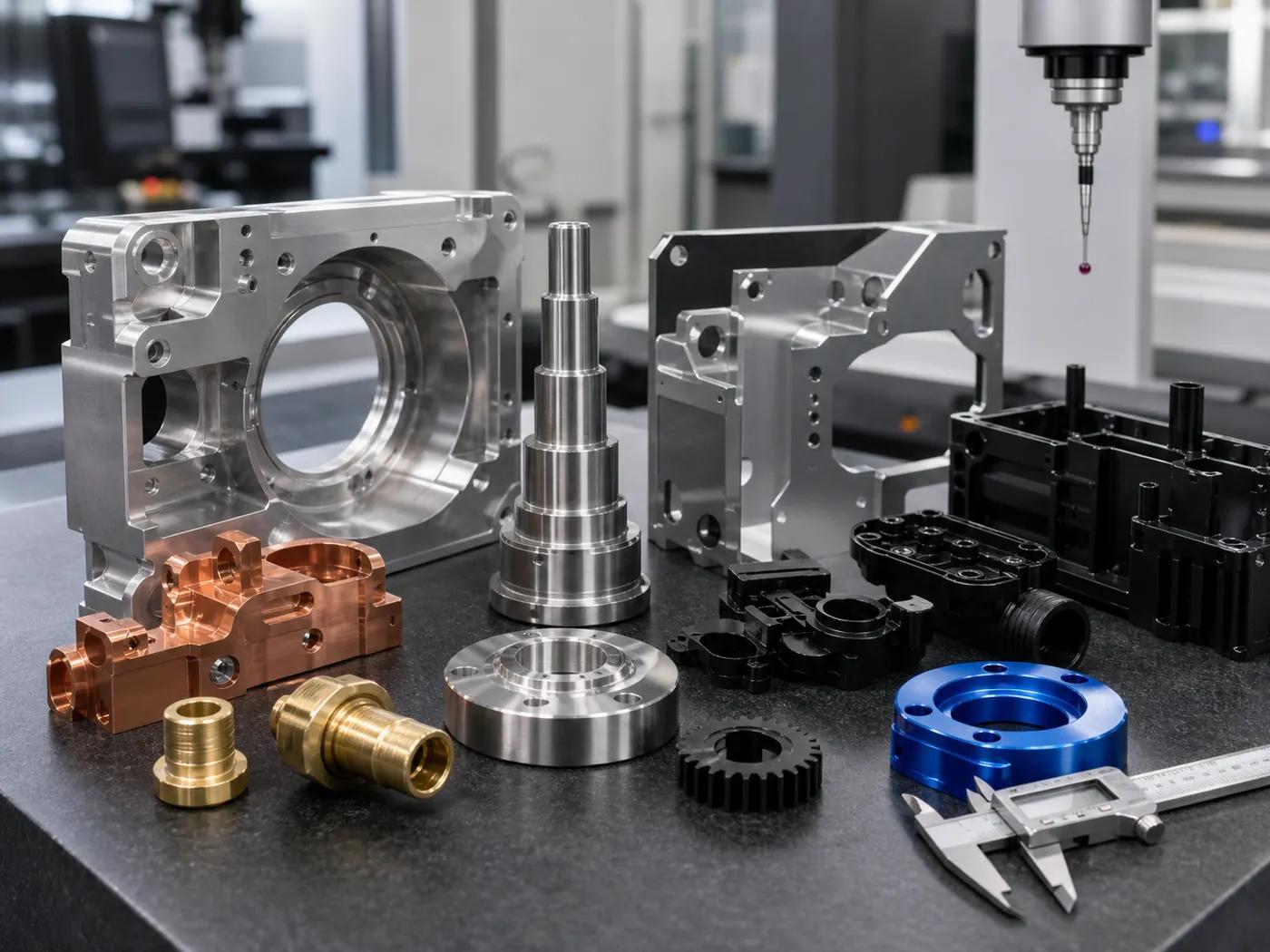
Material choice decides much more than price. It affects machining stability, achievable tolerance, surface quality, post-treatment risk, and the long-term reliability of the assembly.
Aluminum 6061 is often the most efficient starting point for prototypes and light structural parts. Aluminum 7075 brings higher strength for fixtures, aerospace-style brackets, and robotic assemblies. Copper and brass are useful when conductivity, thermal behavior, or corrosion resistance matter.
For engineering plastics, the main question is operating environment. POM is a stable general choice, PEEK supports high temperature and chemical resistance, while PC and ABS are often used for housings and covers.
Need drawing-specific advice?
Send your CAD file, material target, and quantity. HESENX can review process fit before quoting.
Talk to an Engineer